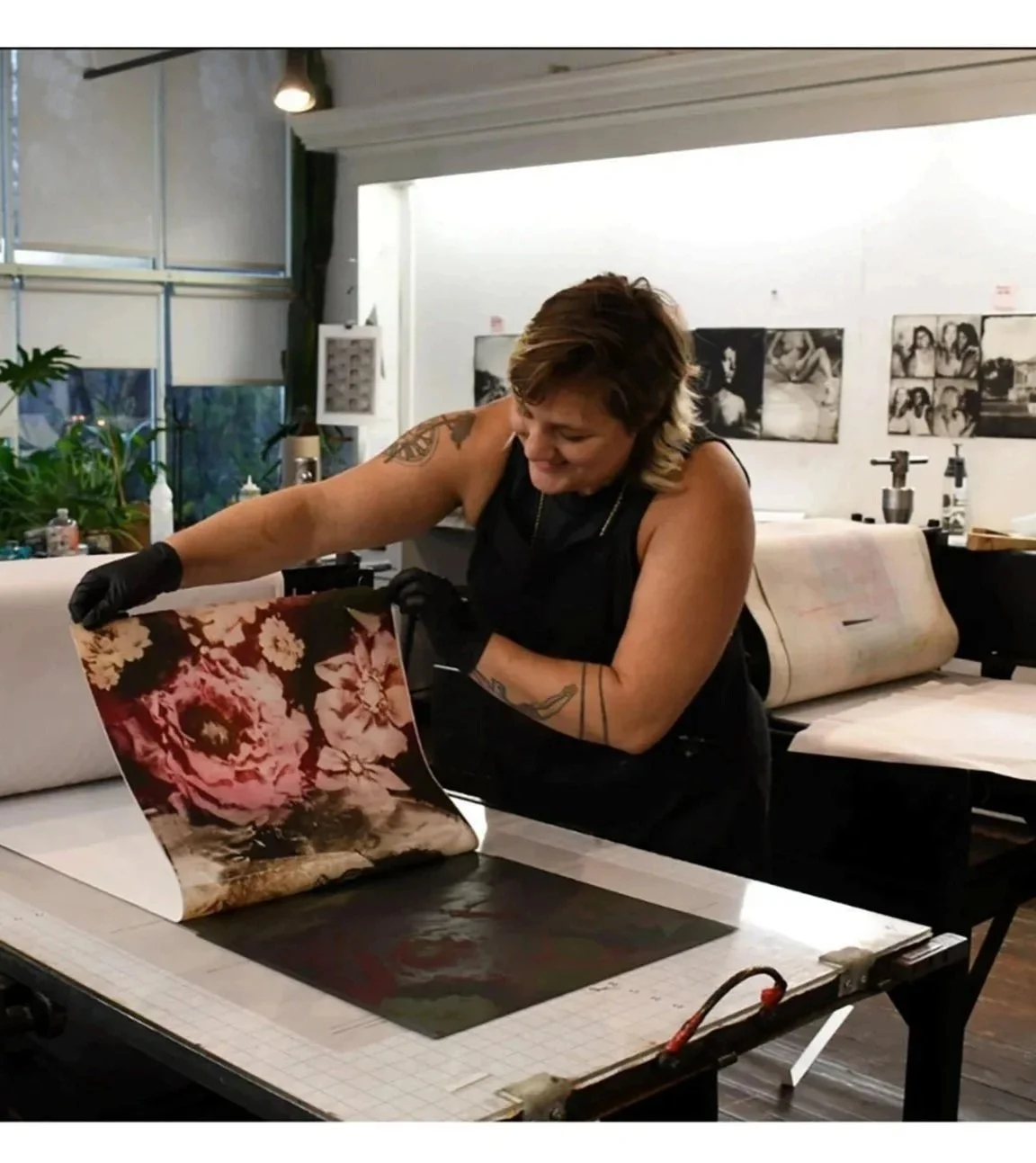
My practice began as an exploration of the construction of identity within the landscape. How do we construct our sense of self in relation to our use of space? How do we self-define in relation to others? In time, the practice of self-actualization within my community became an exploration of the construction of community itself, and the ethos, desires, pathologies, and fantasies contained therein. My installation work began by building unique sets for wet-plate collodion portraits. Highly individualized, each portrait collaboration revolved around the question “how do you want to be seen?” Sometimes re-staging photographs and film stills, at times inhabiting iconic pornographic images or other displays of desire and strength. The process of deconstructing and reclaiming an image that had been a building block of your own self-conception was a powerful gesture of self-actualization, one I experienced both as subject and as photographer. As the sets I built for each shoot became more elaborate, and the transformative potential of the medium of wet plate collodion became more apparent, I realized that we were building small vignettes of the world we desired. We were making small (mostly 4 x 5) intimate proofs of the existence of a different landscape: one of queer love, mutual support, fat beauty, repurposed economies, and rejection of white patriarchal capitalism.